
Beer Terms Explained: A Beginner’s Guide to Understanding Beer Vocabulary
Beer menus used to be simple. You pointed. You got a beer. You drank it.
Now you’re staring at a list that reads like a chemistry syllabus: IBUs, ABV, dry-hopped, malt-forward, adjunct lager, hazy IPA. The person behind the bar asks if you want something with “citrus-forward aromatics and a dry finish,” and you nod because disagreeing seems more complicated.
It doesn’t have to be this way.
Most beer terminology exists for a practical reason: it communicates something real about what you’re about to drink. Once you understand the handful of terms that actually come up regularly, you can order with confidence, have a real conversation about what you liked and didn’t, and stop guessing.
This guide keeps it honest. No unnecessary complexity. Just the terms that matter and what they actually mean.
The Fundamentals: Terms You’ll See Everywhere
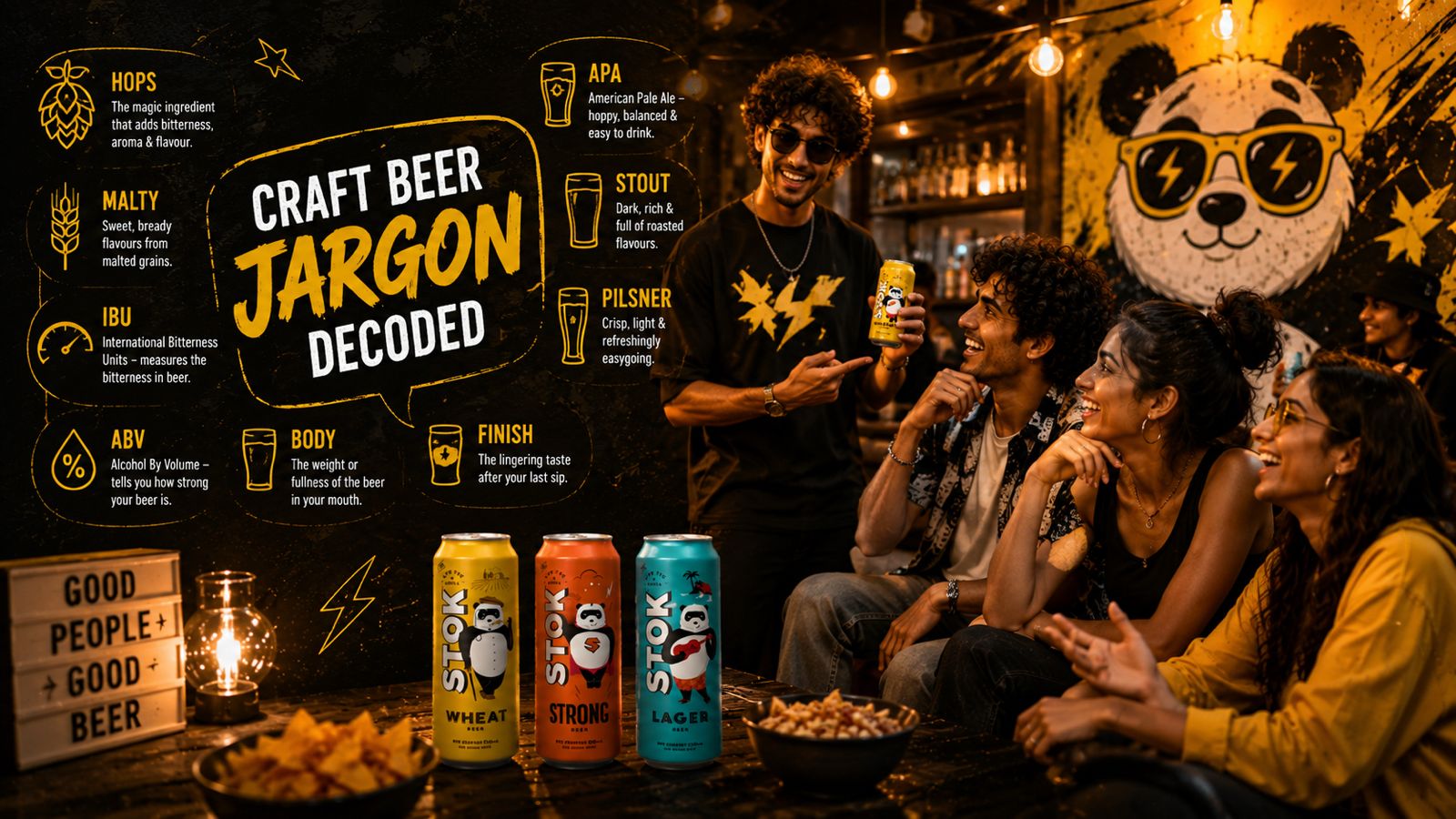
ABV (Alcohol By Volume)
What it means: The percentage of alcohol in the beer. A 4.5% ABV lager is standard strength. A 7% beer is noticeably stronger. An 8–10% imperial stout will hit you differently than your usual pint.
Why it matters: It tells you how to pace yourself. A session beer (usually under 5% ABV) is designed for longer drinking. A strong beer (above 6.5%) is better in smaller quantities. India’s strong beer category, which includes Stok Strong, typically sits in the 6–8% range.
Quick Reference
- Below 4% – Session / Light
- 4–5% – Standard lager range
- 5–7% – Premium / slightly elevated
- Above 7% – Strong, sip slower
IBU (International Bitterness Units)
What it means: A numerical measurement of how bitter a beer is, based on the amount of hops used. The scale runs from about 5 (almost no bitterness) to 120+ (aggressively bitter).
Why it matters: If you know you don’t like bitter beers, look for lower IBU numbers. If you love that clean bite, go higher.
Rough Scale
- 5–15 IBU – Very low bitterness
- 15–30 IBU – Moderate bitterness
- 40–60 IBU – Noticeably hoppy
- 70+ IBU – Aggressively bitter
Most everyday beers, including Stok Lager and Stok Wheat, sit in the low-to-moderate bitterness range. Stok Wheat in particular, is designed to be soft and approachable.
OG / FG (Original Gravity / Final Gravity)
What it means: Measurements of the sugar content in beer before and after fermentation. Higher OG usually means a fuller, more complex beer with greater alcohol potential.
Why it matters: For most drinkers, it doesn’t matter much. However, it can indicate how rich and full-bodied a beer is likely to feel.
Describing Flavour: The Terms That Come Up at the Bar
Malt-Forward
A beer where the malt character is the dominant flavour note. Think bread, toffee, caramel, chocolate, or nutty flavours depending on how the malt is processed.
Stouts, brown ales, and bock-style beers tend to be malt-forward. The opposite is hop-forward, where bitterness and hop aroma dominate.
Hop-Forward / Hoppy
When hops drive the flavour profile of the beer. Hoppy beers often feature bitterness along with citrus, floral, pine, or tropical fruit notes. India Pale Ales (IPAs) are the classic example of hop-forward beers.
Dry-Hopped
Dry-hopping means hops are added during or after fermentation rather than during boiling. This increases aroma without significantly increasing bitterness. If a beer smells intensely fruity or floral but isn’t particularly bitter, it’s likely dry-hopped.
Clean / Crisp
These terms describe a beer that finishes clearly without lingering sweetness, excessive bitterness, or unwanted aftertaste.
A clean, crisp beer leaves you ready for the next sip. This is exactly the profile Stok Lager aims to deliver.
Sessionable
A sessionable beer is one designed for extended drinking. These beers are usually lower in alcohol, light-bodied, and easy-drinking. The term comes from the idea of a drinking session where the beer complements the social experience rather than dominating it. Stok Lager fits comfortably into this category, while Stok Strong does not.
Body
Body refers to how heavy or light a beer feels in your mouth.
- Light Body – Most lagers and session beers
- Medium Body – Wheat beers, pale ales, amber ales
- Full Body – Stouts, porters, barleywines
Stok Wheat sits in the medium-bodied category, offering more presence than a standard lager without feeling heavy.
Beer Styles: The Ones You Actually Need to Know
Lager
Lagers are fermented at cold temperatures using bottom-fermenting yeast. The result is typically a clean, crisp beer with low fruitiness.
Most of India’s beer market is lager-based. Stok Lager is a classic example of the style.
Lager is a fermentation style, not a quality descriptor. There are excellent and poor examples, just as there are in every category.
Ale
Ales are fermented at warmer temperatures using top-fermenting yeast. They tend to be fruitier, more aromatic, and more complex than lagers.
IPAs, stouts, porters, wheat beers, and amber ales are all ale styles.
Wheat Beer (Weissbier / Witbier)
Wheat beer uses a significant proportion of wheat alongside barley malt. The result is typically soft, slightly hazy, and mildly fruity or spicy. Stok Wheat reflects many of these characteristics, offering a smoother and more rounded drinking experience than a standard lager.
IPA (India Pale Ale)
IPAs are known for hop-forward bitterness and aroma. Popular variations include:
- West Coast IPA – Clear and bitter
- New England IPA – Fruity and hazy
- Session IPA – Lower alcohol, easier drinking
IPAs are increasingly popular in India’s growing craft beer scene.
Stout and Porter
These dark beers are built around roasted malt flavours such as coffee, chocolate, and caramel.
Stouts are generally richer and stronger, while porters tend to be lighter and more approachable.
Brewing Process Terms That Come Up Occasionally
All-Malt vs. Adjunct
All-malt beers are brewed entirely with malted grains. Adjunct beers use additional fermentable ingredients such as rice, corn, or sugar.
Adjuncts are not inherently bad. Some beer styles rely on them. However, “all-malt” often signals a focus on flavour complexity rather than cost reduction.
Unfiltered / Hazy
Unfiltered beers retain yeast and proteins that would otherwise be removed. This creates a cloudy appearance known as haze.
The haze is intentional and often contributes to a softer mouthfeel and fuller flavour.
Wheat beers and New England IPAs are common examples of naturally hazy styles.
Pasteurised vs. Unpasteurised
Pasteurisation extends shelf life by eliminating unwanted microorganisms.
Most commercial beers are pasteurised. While some enthusiasts prefer unpasteurised beer for freshness, the distinction isn’t particularly important for most drinkers.
How to Use This Knowledge at the Bar
You don’t need to use technical terms to sound knowledgeable. In fact, experienced beer drinkers often use fewer buzzwords because they already know what they enjoy.
The useful questions are simpler:
- Do you like bitter or low-bitterness beers?
- Do you prefer light-bodied or fuller-bodied beers?
- Do you want something clean and simple or aromatic and complex?
Knowing the answers to those three questions makes ordering beer significantly easier.
And when someone asks whether you’d prefer “something crisp and clean” or “something with more character,” you’ll know exactly what they mean.
Frequently Asked Questions
What Does ABV Mean on a Beer Label?
ABV stands for Alcohol By Volume. It represents the percentage of alcohol in the drink. A 5% ABV beer is generally considered standard strength, while strong beers often range between 6% and 8% ABV.
What Is the Difference Between a Lager and an Ale?
The main difference lies in fermentation. Lagers use cold-fermenting yeast, while ales use warm-fermenting yeast. Lagers are typically cleaner and crisper, while ales are fruitier and more aromatic.
What Does “Malt-Forward” Mean?
A malt-forward beer emphasizes flavours derived from malted grains such as bread, caramel, toffee, chocolate, and nuts. It is the opposite of hop-forward.
What Is a Sessionable Beer?
A sessionable beer is easy-drinking, lower in alcohol, and suitable for extended social occasions. Most session beers fall below 5% ABV.
Conclusion
Beer vocabulary exists to help you get closer to what you actually enjoy drinking, not to create barriers between curious drinkers and good beer.
The terms in this guide cover most of what you’ll encounter on menus, labels, and bar conversations. You don’t need to memorise everything. You simply need enough understanding to make better choices and enjoy the experience with confidence.
The rest is just drinking, which is ultimately what beer is for.